Local SEO for Aesthetic Clinics: Five Signals That Fill Your Diary
 By Surinder Ahitan · 8 min read
Most aesthetic clinics I speak to have done something with their Google Business Profile. Got it verified. Set the primary category. Maybe added a handful of photos. Then they wonder why the clinic three streets away keeps showing up in the map pack and they don’t.
The GBP is one signal out of five. The clinics that dominate local searches in their town have all five working in the same direction. Most clinics have one and a half.
This is what the full picture looks like — and what I’d check first if you told me your diary was quieter than it should be.
Why local search is a different game
General SEO advice is mostly written for national brands and e-commerce sites. The rules are different when you’re a clinic in Harrogate competing for the same patient who typed “lip filler near me” on her phone during a lunch break.
General SEO is about content, authority, and links at scale. Local SEO is about signals of local presence — evidence that Google can show a searcher your business is legitimate, active, and genuinely close to them. Get those signals wrong or inconsistent, and it doesn’t matter how good your website content is. You will not appear.
The patient who searches “aesthetic clinic Harrogate” and can’t find you doesn’t go to page two. She books the clinic that shows up. That enquiry goes to your competitor, and you never know it happened. That invisible lost booking, multiplied by every local search you’re missing, is the revenue gap most clinic owners don’t even know exists.
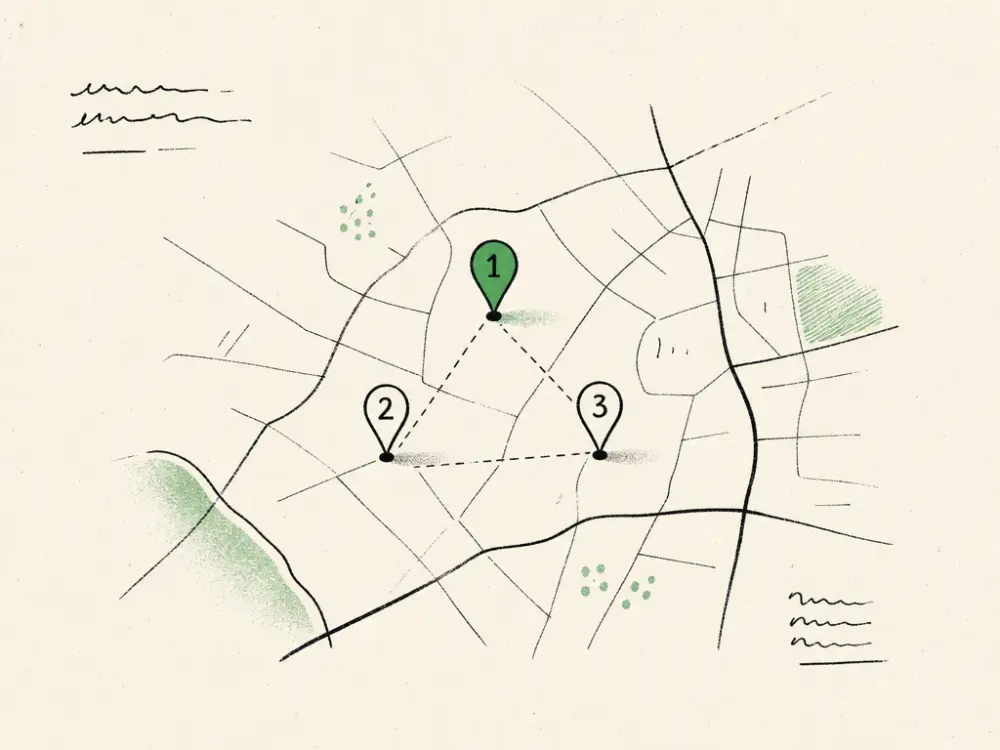
The five local SEO signals that move the needle
1. Your Google Business Profile — maintained, not just created
I wrote a separate post on GBP setup in detail — categories, services, photos, the lot. The short version here: most clinics create the profile and never return to it.
A GBP that hasn’t had activity in four months sends a quiet signal to Google that the business may not be actively trading. Google doesn’t demote you overnight. It just gradually deprioritises you in favour of profiles that show signs of life.
Maintenance means adding a fresh photo every two or three weeks. Updating your hours any time they change. Posting when you add a new treatment. Responding to every review within 48 hours. None of this takes more than twenty minutes a fortnight — but the cumulative effect on your local ranking is real and measurable over three to six months.
2. NAP consistency — the signal most clinics are silently losing
NAP stands for Name, Address, Phone. These three pieces of information need to be identical across every place your clinic appears online. Not similar. Not approximately the same. Character-for-character identical.
Google cross-references your NAP across directory listings, your website, your social media profiles, and your GBP. Every mismatch is a small vote of uncertainty about whether the business is real and where it actually operates. Enough mismatches, and your local authority quietly drops.
The culprits I find most often when auditing clinics:
- The website footer still carries an old phone number from two moves ago
- Yell.com or Thomson Local has a slightly different trading name — “The Aesthetics Studio” vs “Aesthetics Studio” vs “The Aesthetics Studio Ltd”
- The Facebook page lists the old premises address after a clinic relocation
- The Instagram bio has no address or phone at all, leaving a data gap
Start on your own site. Footer, contact page, every page with your address on it. Then work through the main UK directories: Yell, Thomson Local, Yelp, Foursquare, FreeIndex. If you’re listed on Treatwell or Fresha, check those too. Make them identical.
It sounds laborious. It is, once. Once it’s done, it holds — unless you move or change number, at which point you do the sweep again. The payoff is that NAP consistency is a permanent ranking factor, not a one-time fix that wears off.
3. Review velocity — the signal even active clinics get wrong
Most clinic owners understand that reviews matter. What they don’t track is velocity — the rate at which new reviews arrive.
A clinic with 90 reviews, the most recent from last spring, ranks below a clinic with 45 reviews where one arrived on Monday. Google reads an eighteen-month-old review as evidence about an eighteen-month-old business. A review from last week is evidence about the business that’s operating right now.
The clinics I’ve seen sitting in the map pack in busy town centres — Cheltenham, Leeds, Bristol — all have one thing in common. They ask every patient, every time. Not just in the first few months when they’re building up a base count. Month in, month out, year round.
The mechanism doesn’t need to be complicated. A text message after the appointment with a single link. An email two days later for patients who prefer that. One line. One ask. No marketing copy. The clinics losing ground on reviews aren’t losing because their patients are unhappy. They’re losing because they stopped asking.
4. Location-specific content on your website
Your GBP tells Google where your business is. Your website content should confirm it — and go further.
A clinic in Reading whose website mentions “award-winning treatment specialists” and “a personalised approach to aesthetics” without once mentioning Reading, Berkshire, or anywhere nearby is giving Google almost nothing to work with geographically.
The minimum standard: a Contact page with your full address written out in prose (not just embedded in a map widget that Google may not read), plus copy that mentions your town name naturally. That alone is more than most clinic websites do.
The more effective version: a page built specifically for local searchers. Not a template stuffed with keyword variations — that’s not what I mean, and Google has become quite good at recognising it. A page that’s genuinely useful to someone in your area: what treatments you offer, how to get there, parking, what the clinic looks like, what local patients say. If you have multiple locations, each one gets its own page.
I keep seeing clinics spend twelve to fifteen thousand pounds on a redesigned website without once mentioning the name of the town they’re in. The website looks wonderful. It ranks nowhere locally.
5. Local links and mentions
A link from your local Chamber of Commerce. A mention in the regional newspaper’s health feature. A collaboration with the physiotherapy practice on the next road. A quote in a local wellness blog.
These local links carry more weight for your local rankings than the same number of links from generic national directories. They are signals that your business is embedded in the community — recognised by local institutions, referenced by local voices, trusted in the local economy.
Most aesthetic clinics have none of these. The reason isn’t that they’re unavailable. It’s that acquiring them requires doing something that isn’t sitting in the treatment room or behind a desk — reaching out to local businesses and local media, which owner-operators rarely have time for.
Even one or two genuinely local links per year compound. Here is where to start:
- Chamber of Commerce — join if you’re not already a member, and confirm your business is listed in their online directory. Most Chamber directories include a dofollow link to your website. Annual membership fees are usually modest.
- Local press — regional journalists covering health topics regularly need practitioners willing to comment. A short, useful quote from you as an aesthetic practitioner is worth more than any paid advertorial.
- Complementary local businesses — a luxury beauty salon, a dental practice, a gym with a similar client base. A cross-promotion that mentions your clinic on their website is a local citation with context.
- Community sponsorship — a local charity fundraiser, a school sports event, a town festival. The mention in their newsletter or on their website is a local link you’d have otherwise paid a lot more to acquire.

What to do this week
In priority order:
-
Audit your NAP. Search your clinic name on Google, then open every listing you find — directories, social profiles, map entries — and compare the details against your current website. Fix anything that doesn’t match exactly.
-
Set up a review-ask process. If you don’t have one, build it today: a text message after every appointment, a single link, sent within four hours. If you have a process but it’s inconsistent, make it someone’s daily responsibility rather than an afterthought.
-
Check your website mentions your town. Not just in the footer — in headings, in the first paragraph of your About page, in your Contact page content. If your town name doesn’t appear in your visible copy, add it.
-
Identify one local link. Chamber of Commerce is the easiest starting point. If you’re already a member, find out whether your listing includes a link. If you’re not a member, look up the annual fee for your local branch.
None of this produces results overnight. Local SEO works over weeks and months, not days. But the clinics that stop spending on paid ads because they don’t need to are the ones that did this work consistently and without shortcuts.
That’s the R1 (Reach) stage of the framework — and the E (Establish Local Trust) pillar — working as they’re supposed to. Once both are in place, you are findable and credible before a patient even visits your website.
Surinder Ahitan grew the CoLaz aesthetic clinic group from one to nine UK locations in six years, mainly through Google rankings and well-built websites — almost no paid advertising. If you want to see where your own clinic stands on local SEO, the free audit takes 15 seconds and delivers a scored report to your inbox within five minutes.