Your Clinic's Google Business Profile is Costing You Bookings
 By Surinder Ahitan · 8 min read
I’ve audited a lot of aesthetic clinic websites in the last year. The website is usually the thing the owner stresses about. The Google Business Profile — the thing that actually decides whether they show up when somebody searches “Botox near me” on a Wednesday lunchtime — is the thing most owners haven’t touched in eighteen months.
That’s backwards. For a clinic doing local work, your GBP is doing more selling than your website. Maps results sit above the organic listings. They include star ratings, opening hours, photos, and the click-to-call button. A well-set GBP can outrank a clinic with a better website nine times out of ten, just because the GBP is set up properly and the website isn’t.
Below is the GBP setup I’d insist on if I were running your clinic — and the four mistakes I keep seeing.
Why GBP matters more than you think
When somebody searches “lip filler Leamington” on their phone, Google shows them three things in this order:
- Map pack — three local business listings with stars, hours, and a “Directions” button.
- Sponsored ads — clinics paying for visibility, often higher-priced areas.
- Organic results — the regular website links.
The map pack gets roughly 40-50% of the clicks on a local query. The organic results below it share what’s left, minus whatever the ads peel off the top. If you’re not in the map pack, you’re competing for a much smaller pool of attention.
The map pack is decided by your Google Business Profile, not your website. You can have the best website on the high street and still be invisible if your GBP is half-completed.
The setup that actually ranks
Most GBPs I look at are 60% complete. They’ve got the name, the address, the phone, maybe a website link. That’s not enough. Google ranks profiles by completeness, consistency, and recency. Here’s the full setup.
1. Business name — exact, no extras
Use your registered business name. Not “Best Aesthetic Clinic in Leamington”. Not “Sarah’s Clinic — Botox, Filler, Skin”. Google calls keyword-stuffing the business name “spammy practice” and will quietly demote you for it. Worse, a competitor can report you, and Google will rewrite the name themselves — sometimes badly.
If your registered name happens to include the service, fine. Otherwise: just the name.
2. Category — primary and secondary
Primary category is the single most important field on the entire profile. Google uses it to decide what searches you appear for.
For most aesthetic clinics, the primary category should be “Medical spa” or “Skin care clinic” depending on what you mainly do. Add secondary categories for everything else — “Botox clinic”, “Laser hair removal service”, “Cosmetic dentist” if relevant. You can add up to nine. Use them.
A common mistake: setting primary to “Beauty salon”. That puts you in the same bucket as hairdressers and nail bars and disqualifies you from medical-aesthetic searches.
3. Address — and the service-area decision
If you have a physical premises patients walk into, list the address and tick “customers come to my business location”. Show the address publicly.
If you’re a mobile practitioner or you work from a shared clinic and don’t want the address public, set up a service area business. List the towns or postcodes you cover, and hide the street address. This is the right setup for an aesthetic nurse working out of three GP clinics, or someone running mobile injectables in Surrey.
Whatever you choose, be consistent across the web. Same name, address, phone — exactly — on your website, on your social profiles, on directory listings. Google checks this. Inconsistencies dilute your authority.
4. Hours — and the “more hours” trick most clinics miss
Standard opening hours are obvious. The thing most clinics forget: “More hours” lets you specify hours for individual services. “Botox consultations available 9am-1pm”. “Late evening appointments Thursdays only”. This gets displayed in the listing and improves click-through on intent-specific searches.
Also: keep your hours current. If you take a Friday off because the kids are on half-term, mark that day as closed in the profile. Patients who turn up to a closed clinic leave a one-star review.
5. Photos — interior, exterior, treatments, team
Profiles with photos get 42% more direction requests and 35% more website clicks, per Google’s own data. Aesthetic clinics typically have one photo: a stock image of a woman touching her face.
You need at least:
- Three exterior photos (different angles, day and dusk if possible)
- Three interior photos (reception, treatment room, waiting area)
- Three team photos (clinician at work, friendly headshot, team in the clinic)
- Three treatment-result photos (before/afters where you have the consent — careful with ASA compliance here)
Aim for around twenty in total. Add a new one every two or three weeks — Google rewards recency.
6. Services — every single one, properly named
Add every treatment you offer as a distinct service. Each one with a description and a price range if you’re willing to publish it.
“Anti-wrinkle injections” beats “Botox” because it doesn’t trade on the brand name, but list both as separate services so you appear for both searches. List “lip filler”, “cheek filler”, “tear trough filler” as separate items, not as one umbrella “fillers” service.
This is where most clinics leave the easiest wins on the table. A clinic with thirty distinct services listed will out-rank a clinic with five umbrella services on every long-tail search.
7. Reviews — the one thing that compounds
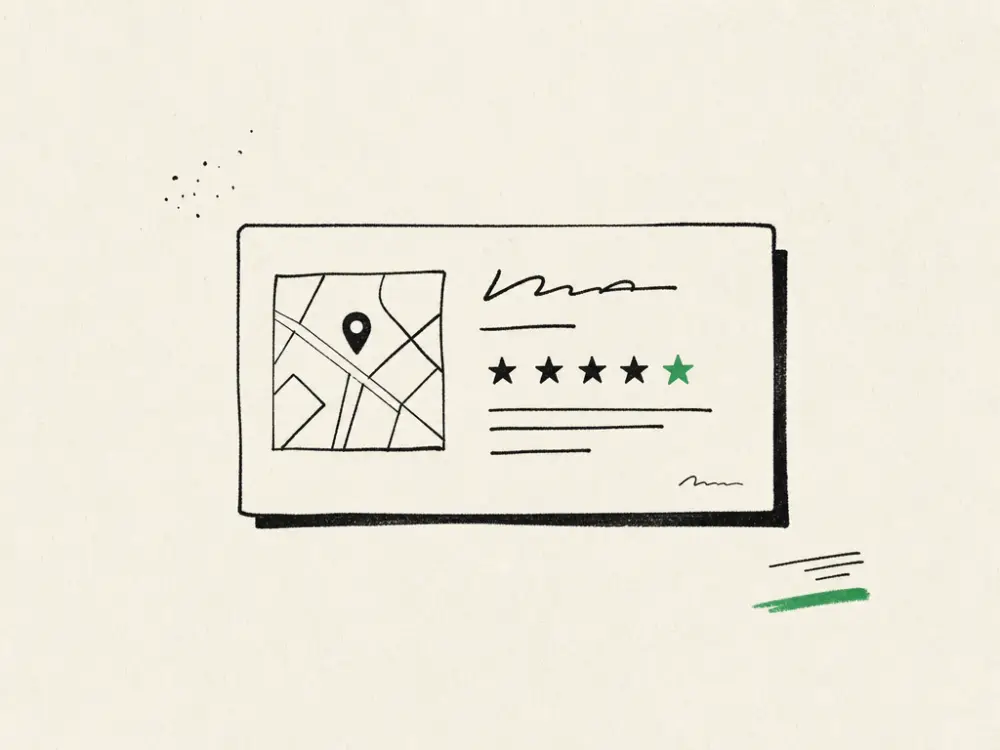
Number of reviews and average rating are two of the heaviest GBP ranking factors. Both improve with consistent asking. The clinics with two hundred reviews didn’t get lucky — they asked every patient.
The cleanest mechanism: a one-line text or email after every appointment with the link to your review page. Not a 200-word ask. Just “If you’ve got a moment, would you mind leaving us a review? [link]. It really helps.”
Reply to every review. Public, polite, brief. Don’t argue with bad ones — thank them for the feedback and offer to talk offline. Bad reviews answered well actually build trust; bad reviews ignored or argued with destroy it.
The four mistakes I keep seeing
After looking at probably two hundred aesthetic clinic GBPs in the last year, the same four mistakes repeat:
1. Wrong primary category. “Beauty salon” or “Cosmetics store” instead of “Medical spa” or “Skin care clinic”. This single setting decides what you appear for. Fix it before anything else.
2. No services listed. Profile has the basics but the Services section is empty. You’re invisible for treatment-specific searches.
3. Ten photos, none from the last year. Google reads photo freshness as a signal of an active business. A profile that hasn’t had a new photo in eighteen months looks abandoned.
4. Twelve reviews, last one from 2023. A clinic that stopped collecting reviews two years ago looks closed even if it’s busy. Get back into the habit of asking.
What to do this week
Pick one of these and do it before next Monday. They’re in priority order:
- Check your primary category. If it’s not “Medical spa” or “Skin care clinic”, change it tonight.
- List every service you offer, one by one, with proper names. Should take about an hour.
- Add ten fresh photos. Phone camera, good light, no stock images.
- Set up a review-ask process — text or email, once after every appointment. Not optional.
You’ll see GBP impressions tick up within two weeks. Bookings follow about a month later. This is the lowest-effort, highest-return thing most clinic owners can do, and most of them never get around to it.
That’s a Reach problem (R1 in the framework) and an Establish-Local-Trust problem (E in S.E.L.F.) bundled into one tool. Fix it, and a chunk of your local marketing is already working harder than your competitors’.
Surinder Ahitan grew the CoLaz aesthetic clinic group from one to nine UK locations in six years, mainly through Google rankings. If you want a structured audit of your own clinic’s GBP and website — including which of the mistakes above are costing you bookings — the free audit takes 15 seconds and lands in your inbox five minutes later.