
The R6 Flywheel: Six Stages Every Aesthetic Clinic Needs
 By Surinder Ahitan · 7 min read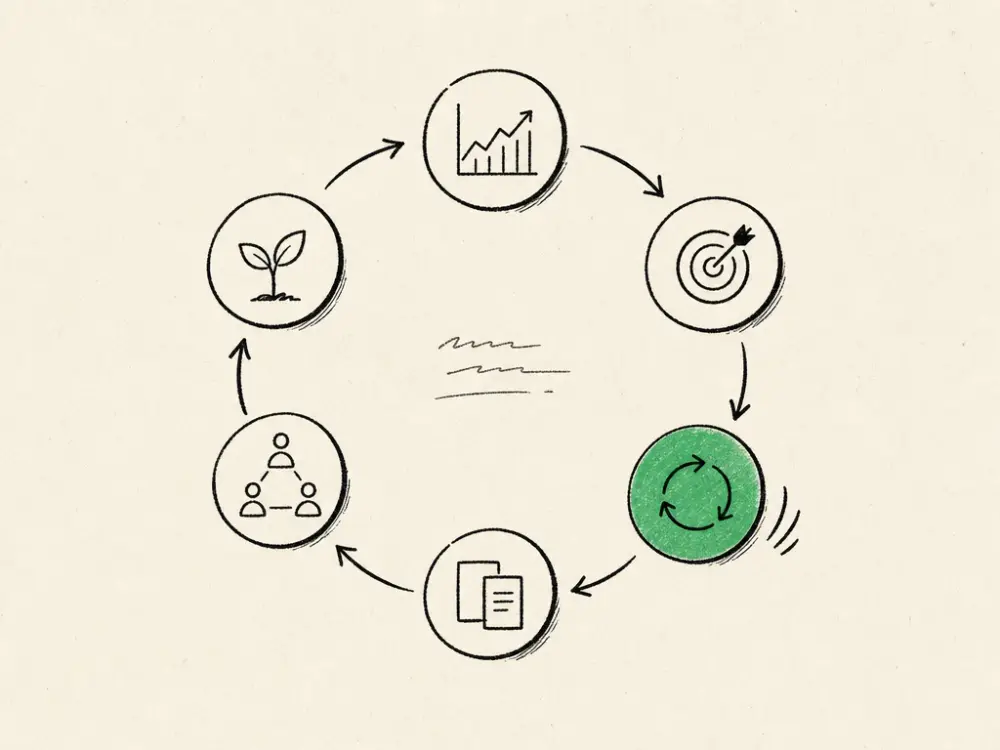
I’ve spoken to a lot of aesthetic clinic owners who spend decent money on marketing but cannot tell you what’s actually working. Facebook ads, Instagram posts, maybe some Google spend, a newsletter that goes out when someone remembers to send it. Each thing runs on its own. None of it connects.
That is not a budget problem. It is an architecture problem.
When there is no system, you are not running marketing — you are running experiments with no control group. And the results reflect that: unpredictable bookings, no idea which channel is actually filling your diary, and the nagging sense that a competitor down the road is doing better even though they appear to be doing less.
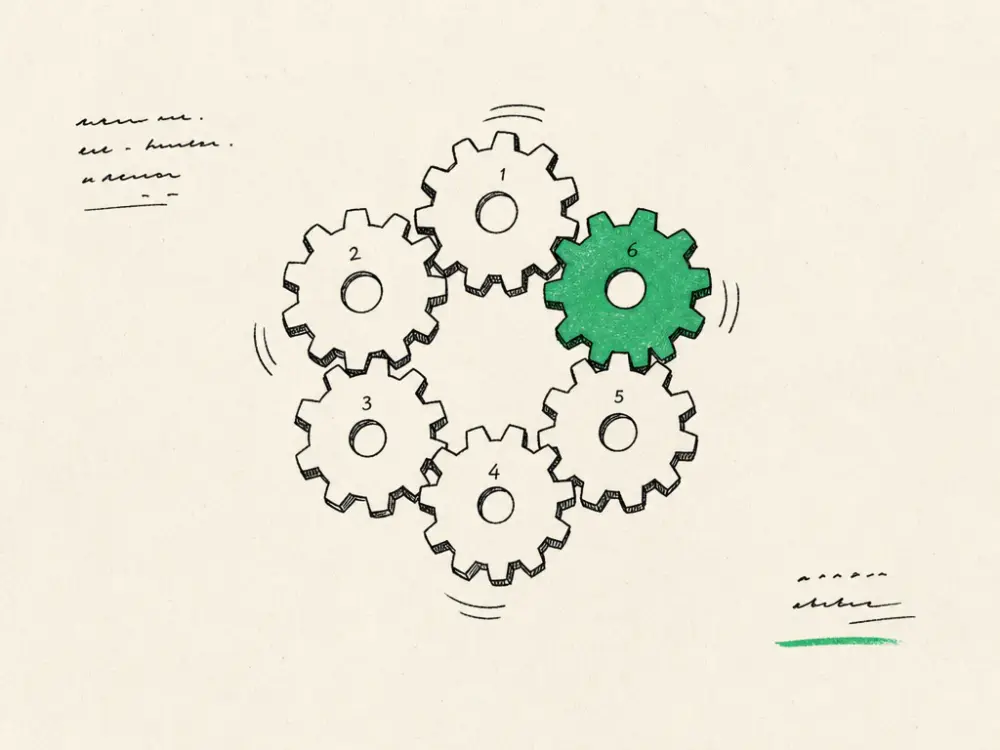
The R6 framework is the system I used to grow my own clinic group from one location to nine. Six stages, in order. You do not skip stages. You do not pour money into Stage 5 before Stage 1 is working. And when bookings go quiet — which they will, every clinic has quiet weeks — the framework tells you exactly where the leak is.
Why the order matters
The stages are sequential by design. Each one feeds the next. If you try to run referrals (Stage 6) before you have a retention system (Stage 4), you are asking happy patients to refer their friends to a clinic that might lose those friends by the third appointment. If you invest in reputation (Stage 2) before you can reliably be found (Stage 1), you are polishing a shop window nobody walks past.
Fixing a later stage while an earlier one is broken is a waste of money. That is the diagnosis most clinics never get, because most marketing advice is sold one tactic at a time.
Stage 1 — Reach: be findable before anything else
When someone in your town decides they want a lip filler or a Botox consultation, they open Google. They do not scroll their Instagram feed hoping a clinic finds them. They type “aesthetic clinic near me” or “lip filler [town name]” and they look at the map pack.
If you are not in those results, the next part of this framework is irrelevant. You will not get a chance to build reputation, convert enquiries, or retain patients — because those patients will never arrive.
R1 is about local search visibility. Your Google Business Profile needs to be complete, your website needs to say clearly what you do and where you are, and your NAP — name, address, phone — needs to be consistent across every place your clinic appears online. That consistency is a ranking signal. Inconsistency quietly suppresses you.
Most clinics I look at have done something here. A verified GBP, a category set, a handful of photos. That is not enough to dominate a competitive local market. R1 is working when your clinic shows up in the top three map results for your primary treatments, in your town, reliably.
Stage 2 — Reputation: trust that sells before you open your mouth
Once someone finds you, they check you out. They read your reviews. They look at how many there are, how recent the most recent one is, whether you bother replying. Then they decide whether to get in touch.
A clinic with 180 reviews averaging 4.8 will convert the same map-pack ranking at a materially higher rate than a clinic with 35 reviews at 4.1. The two clinics might be doing identical work. The one with the stronger review profile wins the click.
Most clinic owners treat reviews as a byproduct of good work. They appear when they appear. The clinics that dominate R2 have a system: they ask every patient at a specific moment, with a specific message, and they reply to every review that comes in. That is not complicated — it is consistent. The difference between 35 reviews and 180 reviews is almost always cadence, not quality of care.
R2 is also your website photography, your before-and-after gallery where consent allows, the way your team is presented. Every trust signal a potential patient reads before they pick up the phone.
Stage 3 — Resell: turn one treatment into a treatment plan
A patient who books a consultation and attends is an acquisition you have already paid for. What happens next determines whether you break even on that acquisition or profit from it.
Most clinics rely on the patient to come back on their own initiative. Some do. Many do not — not because they disliked the experience, but because nobody followed up, nobody suggested what made sense next, nobody gave them a reason to return before the top-up appointment they were vaguely thinking about booking.
R3 is about revenue per patient. A follow-up sequence after a first appointment. A treatment plan agreed at the consultation. A natural point to introduce a complementary service based on what the patient actually asked about. None of this requires a marketing budget. It requires a process.
A clinic consistently turning a first-visit patient into someone with a three-appointment plan is extracting two or three times the revenue from the same acquisition cost.
Stage 4 — Retain: keep the patients you already won
Retention is different from resell. Resell adds treatments. Retention keeps patients from drifting to a competitor before they ever have a chance to resell.
The patients most likely to leave are not the ones who had a bad experience. They are the ones who had a fine experience and felt no particular connection to the clinic. A competitor opens nearby. A friend mentions somewhere new. A discount ad shows up. Without retention mechanics in place, you spend acquisition budget winning back patients you already had.
Retention is built through consistent communication, early access to new treatments, and small signals that remind patients they are known — not just a booking reference. The F pillar of S.E.L.F (Freedom Through Systems) is about exactly this: building retention on autopilot so it runs whether or not the owner is thinking about it. A retention system that depends on someone remembering to send a message is not a retention system. It is a retention intention.
Stage 5 — Reactivate: win back lapsed patients before they go elsewhere
Even with a strong retention system, some patients go quiet. Life happens. The gap between appointments stretches from 12 weeks to 18 months without anyone noticing until the records are pulled.
R5 is the system for identifying those patients and reaching out before they decide to go somewhere else. A short reactivation sequence — two or three messages over a few weeks, acknowledging the gap, offering something relevant — can recover a meaningful proportion of patients who would otherwise have silently churned.
This is one of the most underused revenue levers in aesthetics. Most clinics have patient records going back years and no structured process for acting on them. The revenue is sitting there. A reactivation run against a 12-month lapsed-patient list will consistently outperform a cold-acquisition campaign on cost per booking.
Stage 6 — Referrals: make happy patients your best acquisition channel
Referred patients cost nothing to acquire. They arrive with trust already built because someone they respect vouched for you. They convert at a higher rate, stay longer, and are more likely to refer someone else in turn.
Most clinics get referrals. Very few have a referral system. The difference is the difference between hoping it happens and making it happen. A simple, explicit referral programme — tell a friend, here is what happens when they book — does more for word-of-mouth than any passive hope that satisfied patients will mention you unprompted.
R6 is also where the flywheel logic comes in. Referrals feed R1 (new patients finding you through trusted recommendations) and R2 (social proof that builds reputation at scale). The stages loop. A clinic that executes all six does not just grow — it compounds.
What to do this week
1. Audit which stages you actually have a system for. Not which ones you do sometimes, or which ones you intend to build — which ones have a repeatable process behind them that runs regardless of how busy you are.
2. Fix the earliest broken stage first. If R1 is unreliable — if you cannot explain why you do or do not appear in a given local search — start there. Everything downstream depends on it.
3. Map your R3 process. After a patient’s first appointment, what happens? Write down every step, including the ones that currently do not happen. The gaps will be obvious.
4. Pull your lapsed-patient list. Patients who last visited more than six months ago, who have not rebooked. Even a rough count gives you a sense of the R5 opportunity you are not currently acting on.
The framework is not designed to be built all at once. It is designed to be built in order. One stage working properly is more valuable than six stages working badly.
Surinder Ahitan grew the CoLaz aesthetic clinic group from one to nine UK locations in six years, mainly through organic search and well-built websites. He now helps UK clinic owners build the same systems from scratch. If you want to know which stages of the R6 framework are working in your clinic and which ones are leaking patients, the free audit will show you in minutes.