
What an Aesthetic Clinic Marketing Budget Should Look Like
 By Surinder Ahitan · 8 min read
The question I get asked more than any other is some version of “how much should I be spending on marketing?” And the honest answer is that the number matters far less than where it goes.
I’ve watched a clinic spend £3,000 a month and grow slower than a clinic down the road spending £400. Not because the second owner was cleverer, but because the first one was renting attention every month and the second one was building something that kept working after the invoice was paid.
So here’s how I’d set a budget if I were sitting in your treatment room with the accounts open. Real numbers, real line items, and the places the money quietly leaks out.
Why the number matters less than the split
Most marketing budgets in this industry are set by whoever emailed the owner last. An agency proposes £1,500 a month, the owner thinks that sounds about right, and twelve months later nobody can say what it bought.
The problem isn’t the amount. It’s that the money went into things that stop the moment you stop paying. Ads switch off. Boosted posts disappear. Meanwhile the website is still four years old, the treatment pages are still thin, and the Google Business Profile still has eleven reviews.
A budget that’s split properly compounds. Every month you spend adds to what the previous month built. A budget that’s split badly resets to zero every thirty days, which is why so many owners feel like they’re paying to stand still.
The percentage rule, and what it’s actually for
The rough industry benchmark is 5–10% of turnover, and it’s a reasonable starting point as long as you understand what it’s measuring.
- Turnover, not profit. If your clinic turns over £250,000, you’re looking at roughly £1,000–£2,000 a month.
- Higher when you’re growing. Opening a second room, a second site, or launching a new treatment line? Expect 10–15% for six to twelve months. You’re buying awareness you don’t have yet.
- Lower when you’re established and full. A clinic with a strong database, a full diary and a steady referral flow can hold at 4–5% and spend it almost entirely on keeping the people it already has.
The percentage is a sanity check, not a plan. If it tells you £1,400 a month and you’re currently spending £3,000 on ads with no idea what they return, the percentage isn’t your problem — the allocation is.
The three buckets
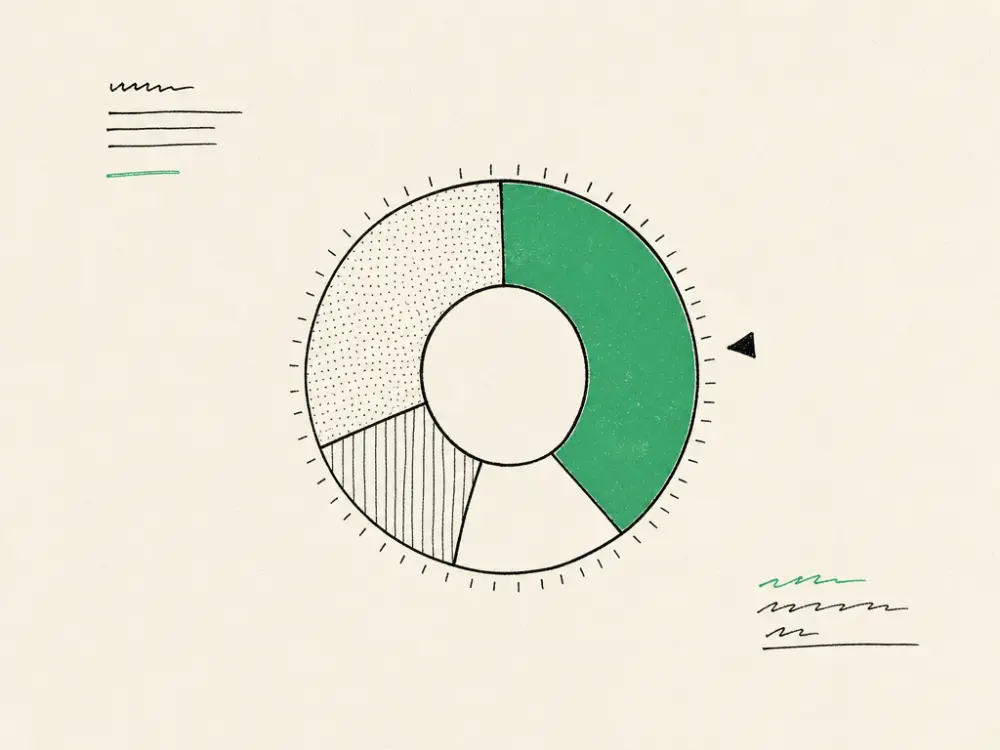
Every pound in a clinic marketing budget belongs to one of three jobs. I’d start most single-site clinics here and adjust from there.
1. Assets that compound — about 50%
The website, the treatment pages, search visibility, your Google Business Profile, photography, the content that answers the questions patients actually type. This is the half of the budget you’ll still be benefiting from in three years.
Typical monthly line items:
- Website maintenance and improvement — £100–£400. Not a rebuild every two years. Steady work on the pages that convert.
- SEO — £400–£1,200 depending on whether it’s a specialist or a generalist. The single biggest lever for a local clinic, and the slowest to show up.
- Photography — £50–£150 averaged monthly. Real photos of your room, your team, your results. Stock images cost you bookings.
- Hosting, domain, technical — £20–£60.
Nobody feels this bucket working in month one. By month nine it’s usually the only bucket producing enquiries you didn’t pay for individually.
2. Attention you rent — about 30%
Google Ads, Meta ads, the occasional local sponsorship. Useful, and genuinely fast, which is why it’s so easy to over-fund.
Rented attention is the right call when you need bookings this month — a quiet January, a new treatment nobody’s searching for yet, a brand-new site with no search history. It’s the wrong call as a permanent substitute for being findable.
A workable starting point for a single clinic is £300–£600 a month on Google Ads targeting genuine treatment intent in your town. Not brand awareness. Not boosted posts. People typing what you do, near where you are.
3. Keeping the patients you have — about 20%
This is the bucket almost every clinic under-funds, and it’s the cheapest revenue in the building.
- Email and SMS platform — £30–£80 a month.
- Review collection — often bundled, sometimes £20–£50.
- Booking and reminder system — £50–£150.
- Patient events, loyalty credits, referral rewards — a few hundred pounds a quarter.
A patient who returns four times a year for five years is worth several thousand pounds. Winning them back costs a text message. That’s the R4 and R5 end of the flywheel — Retain and Reactivate — and it’s where the best return per pound in this industry sits.
The line items that quietly waste money
After going through a lot of clinic accounts, the same leaks show up:
Retainers with no reporting. If your agency can’t tell you what ranked, what changed, and what it produced, you’re funding activity, not outcomes. Ask for a monthly one-pager. If it doesn’t exist, that’s your answer.
Boosting posts. £20 here, £30 there, several times a month. It buys reach from people who’ll never travel to you and produces almost no traceable bookings. Add up twelve months of it — most clinics are surprised.
Directory subscriptions. A few are worth it. Most are £40 a month for a listing nobody clicks. Check the referral traffic before you renew.
Rebuilding the website every two or three years. A rebuild costs thousands and usually resets whatever search visibility the old site had earned. Steady improvement is cheaper and safer than periodic panic.
Paying twice for the same patient. Running ads to a page that doesn’t convert, then paying a lead-generation service to send you the same person. Fix the page first.

Measure cost per booked treatment, not cost per lead
Cost per lead is the number agencies report because it looks good. It’s also the number that tells you least.
Fifty enquiries at £8 each looks better than twelve at £30 — right up until you see the fifty produced three bookings and the twelve produced seven. What you want on the page is cost per booked treatment, and after that, cost per patient who came back.
That means being able to trace a booked treatment back to the click that started it. If you can’t, every budget conversation you have will be guesswork dressed up as strategy. It’s the L in S.E.L.F — Leverage Smart Marketing — and it’s not optional if you’re spending real money.
You don’t need anything elaborate. Ask every new patient how they found you and write it down. Do it for three months and you’ll know more about your marketing than most clinics know after three years.
What to do this week
- Add up what you actually spent last month. Every subscription, retainer, ad account and boosted post. Most owners are 20–30% out on the guess.
- Sort each line into one of the three buckets — compounding, rented, retention. If compounding is under a third, you’ve found the problem.
- Cancel one thing you can’t justify. There’s usually at least one. Put the money into the bucket that’s thinnest.
- Start recording how every new patient found you. One column on a spreadsheet. It costs nothing and it changes every decision after it.
Set the split first. The size of the budget is a much easier conversation once you know each pound has a job.
Surinder Ahitan grew the CoLaz aesthetic clinic group from one to nine UK locations in six years, mainly through search and well-built websites rather than ad spend. If you want a straight answer on whether your current marketing budget is buying anything that lasts, the free audit takes 15 seconds and lands in your inbox shortly after.