
The Aesthetic Clinic Website Structure That Actually Ranks

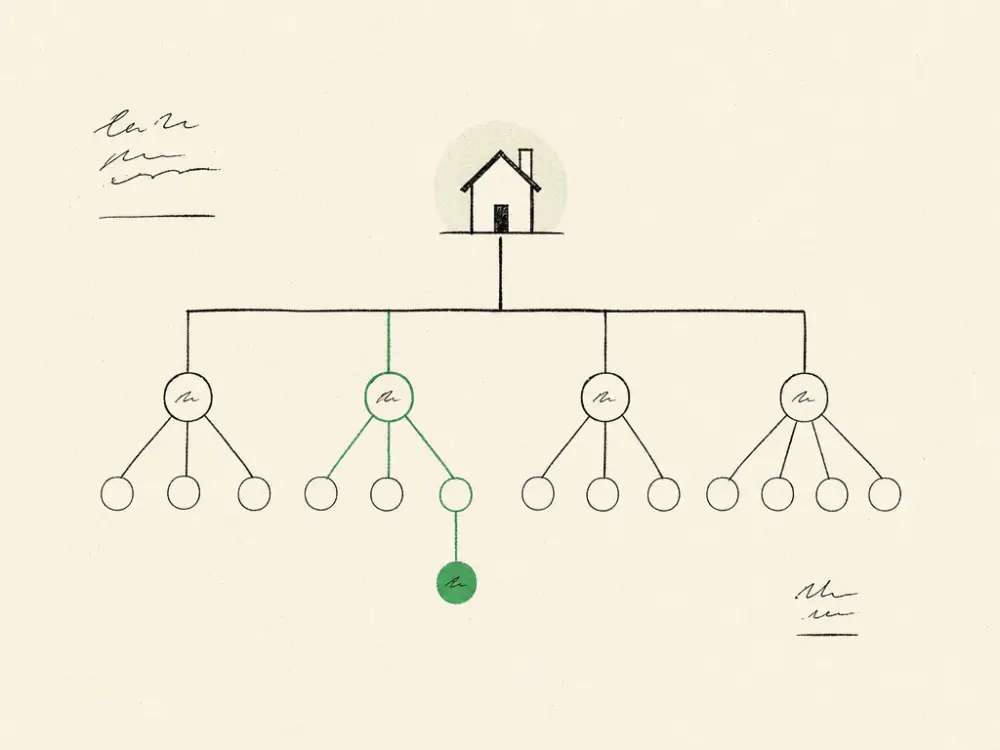
I’ve audited a lot of aesthetic clinic websites this year, and the pattern I see most often has nothing to do with design. It’s structure. A clinic launches with four or five pages, then adds a new one every time someone asks a question — one for “Botox”, one for “anti-wrinkle treatment”, one for a seasonal offer, one for a blog post nobody ever links to again. Eighteen months later there are sixty pages and no map.
Google notices this before you do. Its crawler spends its time wandering through near-duplicate and orphaned pages instead of the ones that actually convert. Two pages end up competing for the same search, and neither wins. A page you’re proud of sits three clicks from the homepage with nothing pointing to it, so it never earns the trust it needs to rank.
None of this shows up when you look at the site yourself. It only shows up in Search Console, months later, as a plateau nobody can explain. I’ve seen clinics with genuinely good content stuck on page two because the site itself was working against them — every new page diluting the ones that came before it instead of adding to them.
Why it matters
This isn’t a tidiness problem. A confused structure means enquiries that should land on your treatment page land on a competitor’s instead — not because their content is better, but because Google trusts their structure more than yours. Every pound spent on content, ads, or a rebuild gets diluted if the pages it drives traffic to don’t sit inside a structure that tells Google, and patients, what actually matters.
Patients feel the confusion too, even if they couldn’t name it. Someone who lands on a treatment page and can’t find their way to booking, pricing, or the nearest related treatment closes the tab and searches again. A clear structure isn’t only about rank. It’s the difference between a visit that ends in an enquiry and one that ends in a bounce.

The hub-and-spoke model, for a clinic
The fix is the same one search engine optimisation people have used for twenty years, just applied properly to a clinic site rather than borrowed wholesale from a generic template.
1. One page per keyword — really
If “Botox” and “anti-wrinkle injections” are the same treatment to a patient, they should be the same page to Google. Two separate pages fighting for the same search split your ranking signals in half instead of adding up to one strong page. This is different advice to your Google Business Profile, where listing both terms as separate services is correct — a profile can hold many service names, a website page can’t hold two competing intents. Before you write anything new, search your own site for the keyword first. If a page already covers it, expand that page. Don’t start a new one.
When you do find two pages fighting over the same search, don’t just delete the weaker one. Fold its useful content into the stronger page, then 301-redirect the old URL across. That way any links or rankings the weaker page had earned transfer across instead of disappearing.
2. Every treatment page reports to a pillar
Group related treatments under one hub — injectables, skin, body, whatever matches how you actually run the clinic — and have each treatment page link back up to its hub, and the hub link back down to every treatment beneath it. A flat pile of forty treatment pages with no hub loses the shared authority those pages could be passing to each other.
Picture it as a filing cabinet, not a shoebox. /injectables/ is the drawer. /injectables/lip-filler/, /injectables/cheek-filler/, /injectables/anti-wrinkle/ are the folders inside it. Each folder links back to the drawer, and the drawer links to every folder. A patient — and Google — can see the whole category from any single page inside it.
3. Local pages live under their own hub, not buried in the blog
If you run more than one location, each location needs its own page, and those pages need their own visible section — not one post half-buried three pages deep in the blog archive. A location page that isn’t linked from your main navigation might as well not exist to a patient scanning your menu, and Google reads that absence as low importance too.
4. No page should be more than two clicks from the homepage
Count the clicks. Homepage to hub, hub to page — that’s the whole journey for anything that matters. If a treatment page needs three or four clicks to reach, either your navigation is missing it or the page shouldn’t exist as a stand-alone URL. Depth is one of the clearest signals you can control in an afternoon with nothing but your own navigation menu.
5. Blog posts link sideways and up, not just back to the blog index
A post about, say, patient retention should link to the retention section of your service pages, not just to “back to blog” and the homepage. Every post you publish is an opportunity to pass a small amount of authority to the commercial page it supports. Most clinic blogs never do this, which is why the blog and the service pages behave like two separate websites that happen to share a domain.
6. Navigation labels should match how patients search, not internal jargon
If your clinic calls a treatment “medical microneedling” internally but patients search “skin needling”, the menu label matters. Use the patient’s word in the navigation and the URL, and keep the clinical term as a secondary mention on the page itself. A beautifully structured site still underperforms if every label in the menu is written for staff rather than for the person searching.
7. Audit for overlap before you publish anything new
Once a month, pull every URL on the site into a spreadsheet and note the one keyword each page is meant to own. It takes an hour and it’s the single fastest way to catch the duplication that quietly caps your rankings. Clinics that skip this step are the ones with two “aesthetic clinic marketing” pages ranking position 40 and 45, when one focused page could rank top ten.

What to do this week
In priority order:
- List every page on your site and its one target keyword. A spreadsheet, half an hour. Flag anything that overlaps with another page.
- Count the internal links pointing at your top three pages. If it’s fewer than five each, spend the rest of the afternoon adding contextual links from related content.
- Check the Search Console coverage report for orphaned pages — pages Google has found but nothing on your site links to — and give each one a home inside a hub.
- Before your next blog post, search your own site for the keyword first. If it’s already covered, expand what’s there instead of adding to the pile.
None of this needs a rebuild. It needs an afternoon with a spreadsheet and the willingness to delete or merge pages you were proud of writing. That’s an R1-Reach problem and a Leverage-Smart-Marketing problem — the framework’s L — solved with structure rather than more content.
Surinder Ahitan grew the CoLaz aesthetic clinic group from one to nine UK locations in six years, mainly through Google rankings.
If you’d like someone to handle this for you, I build and run websites for UK aesthetic clinics for £297 a month, with no build fee and you can cancel any time after month 1. Book a 30-minute call and I’ll tell you honestly whether it fits.